What is Morton's Neuroma Surgery?
If you’ve been dealing with persistent foot pain—specifically a burning or stabbing sensation between your toes—you might have come across the term Morton’s Neuroma. For many people, this condition starts as a minor annoyance but gradually becomes unbearable, making everyday activities like walking or wearing shoes incredibly painful.
This is where Morton’s Neuroma surgery comes in. But before you jump to surgery, it’s important to understand exactly what Morton’s Neuroma is, why surgery might be recommended, and what the process involves. This guide walks you through everything you need to know, so you can make an informed decision with confidence.
Understanding Morton’s Neuroma
What is Morton’s Neuroma?
Morton’s Neuroma is a painful condition that affects the nerves in the ball of your foot—most commonly between the third and fourth toes. It happens when the tissue around a nerve thickens due to repeated irritation, pressure, or injury. This thickened nerve can feel like a small pebble inside your shoe, causing sharp pain, burning, or numbness.
What Causes Morton’s Neuroma?
While the exact cause can vary, several factors increase your risk:
- Wearing tight, high-heeled, or narrow shoes
- Repetitive stress from sports like running or tennis
- Foot deformities such as flat feet, high arches, or bunions
- Prolonged standing on hard surfaces
Symptoms You Shouldn’t Ignore
The pain of Morton’s Neuroma often starts gradually but gets worse over time. Common symptoms include:
- A burning sensation in the ball of your foot
- Tingling or numbness in your toes
- The feeling of standing on a pebble
- Pain that worsens when wearing shoes or walking
Diagnosing Morton’s Neuroma
Most podiatrists diagnose Morton’s Neuroma through a physical exam. They might press on the affected area to reproduce the pain. In some cases, imaging like ultrasound or MRI is used to confirm the diagnosis, especially if your symptoms are severe.
When is Surgery Recommended?
Why Surgery Isn’t the First Step
Surgery is typically recommended only after conservative treatments have failed. Most doctors start with non-surgical options like:
- Changing footwear to wider, more supportive shoes
- Orthotic inserts to relieve pressure on the nerve
- Anti-inflammatory medications
- Corticosteroid injections
- Physical therapy or massage
Signs You Might Need Surgery
If you’ve tried these treatments for several months and still experience:
- Constant pain that disrupts your daily activities
- Difficulty walking even short distances
- Pain that wakes you up at night
- No improvement despite switching shoes or using orthotics
…then your doctor may recommend Morton’s Neuroma surgery as a long-term solution.
What Surgery Can Achieve
The goal of surgery is simple: relieve pressure on the affected nerve or remove the damaged nerve entirely. This can provide lasting relief, especially if the neuroma has become too thickened or scarred for other treatments to work.
Types of Morton’s Neuroma Surgery
When conservative treatments like shoe modifications, orthotics, and injections no longer provide relief, surgery becomes an option for treating Morton’s Neuroma. But surgery isn’t one-size-fits-all. Depending on your symptoms, medical history, and the severity of your neuroma, there are several surgical approaches your doctor might recommend.
Neurectomy (Nerve Removal Surgery)
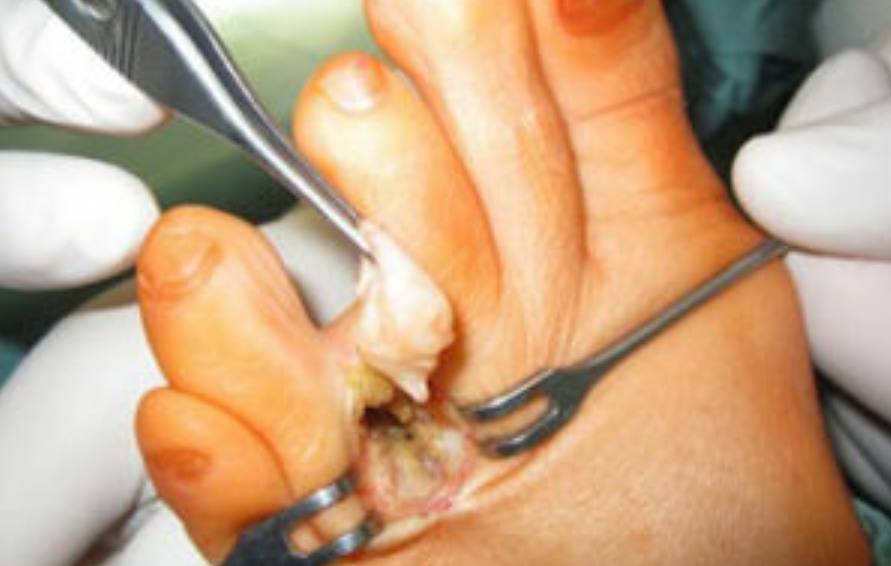
This is the most common type of Morton’s Neuroma surgery, especially when the nerve is severely damaged or scarred. In a neurectomy, the surgeon removes the thickened nerve itself, aiming to eliminate the source of pain.
Approaches to Neurectomy
- Dorsal Approach: The incision is made on top of your foot, so weight-bearing becomes easier during recovery.
- Plantar Approach: The incision is made on the sole of your foot. While this can involve more healing time, it offers better access to the nerve.
Neurectomy has a long track record, but removing a nerve means there’s a risk of permanent numbness in the toes.
Decompression Surgery
If the neuroma is caused by surrounding tissues (like ligaments) pressing on the nerve, your surgeon might choose decompression surgery instead. Rather than removing the nerve, this procedure releases the tight structures compressing it, freeing up space for the nerve to heal.
This option preserves the nerve, reducing the risk of numbness. However, it’s generally most effective for smaller neuromas caught in earlier stages.
Cryogenic Neuroablation (Cryosurgery)
Cryosurgery uses extreme cold to freeze and destroy the thickened nerve tissue, offering pain relief without needing a large incision. This procedure is often performed using image guidance, ensuring precision.
It’s less invasive, and recovery tends to be quicker, but it may not be suitable for larger neuromas or cases with extensive scarring.
Radiofrequency Ablation (RFA)
RFA uses heat generated by radio waves to disrupt the nerve’s ability to send pain signals. This is considered a minimally invasive option, often performed under local anesthesia.
RFA is attractive for patients wanting to avoid traditional surgery, though it may need to be repeated if the nerve regenerates over time.
Detailed Step-by-Step Explanation of Each Procedure
Understanding what happens during surgery can help you feel more prepared and confident. Here’s a closer look at how each type of Morton’s Neuroma surgery works.
Preparing for Surgery
Before surgery, your podiatrist will review your medical history, imaging scans (like MRI or ultrasound), and any previous treatments you’ve tried. You’ll also get clear instructions about fasting, medications, and post-op care.
Step 1: Anesthesia
Most Morton’s Neuroma surgeries are performed under local anesthesia, meaning only your foot will be numb. In some cases, especially with larger neuromas, general anesthesia may be used.
Step 2: Creating the Incision
- Neurectomy or Decompression: A small incision (usually 2-3 cm) is made either on the top or bottom of your foot.
- Cryosurgery and RFA: These require only a tiny puncture, guided by ultrasound.
Step 3: Accessing the Neuroma
- In neurectomy, the thickened nerve is carefully isolated and removed.
- In decompression surgery, surrounding ligaments are cut to release pressure.
- In cryosurgery and RFA, a specialized probe is inserted to apply either freezing cold or heat to the nerve.
Step 4: Closing the Incision
After removing or treating the nerve, the incision is closed with sutures, and a sterile dressing is applied.
Step 5: Immediate Aftercare
You’ll rest briefly while your anesthesia wears off. Most patients go home the same day, with clear instructions for rest, elevation, and medication.
Risks and Complications of Morton’s Neuroma Surgery
Like any medical procedure, Morton’s Neuroma surgery comes with potential risks. Understanding these upfront helps you weigh the pros and cons realistically.
Common Surgical Risks
- Infection at the incision site
- Excessive bleeding or swelling
- Delayed wound healing
Nerve-Specific Risks
- Stump Neuroma: In some cases, the cut nerve forms a painful mass of scar tissue, creating a new pain point.
- Permanent Numbness: Especially with neurectomy, losing sensation in the toes near the neuroma is possible.
Recurrence of Symptoms
Even after surgery, some patients continue to feel pain—especially if the original cause (like improper footwear) isn’t addressed. Studies suggest recurrence rates can range from 10% to 30%, depending on the surgical method and individual factors.
Long-Term Changes
Some people notice changes in their foot’s biomechanics after surgery, which may require custom orthotics or physical therapy to correct.
Managing Risk with Proper Care
The good news? Many complications can be avoided with proper post-surgical care and by following your surgeon’s guidelines closely.
Recovery After Morton’s Neuroma Surgery
Recovery varies depending on the type of surgery you choose. Here’s what you can generally expect:
Immediate Post-Surgery
For most procedures, you’ll go home the same day with your foot wrapped in a protective dressing. You’ll need to:
- Keep weight off your foot for the first few days (especially with plantar incisions).
- Elevate your foot to reduce swelling.
- Take prescribed pain medication to stay comfortable.
First Few Weeks
During the first 2-4 weeks, your activity will be limited, and you may need crutches, a walker, or a special post-op shoe. If stitches were used, they’ll typically be removed within 10-14 days.
Full Recovery Timeline
- Neurectomy or Decompression: Most people resume light activities within 4-6 weeks, but full recovery may take 3 months or more.
- Cryosurgery and RFA: Recovery is quicker—many people return to normal activities within 2-3 weeks.
Physical Therapy and Footwear Changes
To prevent recurrence, your doctor may recommend:
- Custom orthotics to support proper foot alignment
- Switching to wider shoes with cushioned soles
- Strengthening exercises to restore foot function
Emotional and Practical Recovery
It’s normal to feel both relief and anxiety after foot surgery. Give yourself time to heal, and don’t hesitate to contact your surgeon if something feels off during recovery.
Success Rates and Long-Term Outcomes
When you’re considering surgery for Morton’s Neuroma, one of the biggest questions on your mind is probably: Will this actually work? After all, you want relief that lasts—not just a temporary fix.
What Do the Numbers Say?
Studies suggest that Morton’s Neuroma surgery has a success rate of around 75% to 85% (Foot and Ankle Clinics, 2019). Success typically means significant pain reduction and the ability to return to normal activities without constant discomfort.
However, success doesn’t mean perfection. Some patients experience mild numbness, stiffness, or occasional flare-ups after surgery. But for most, these are minor trade-offs compared to the pain they lived with before.
Factors That Affect Your Results
Your outcome depends on several factors:
- Size and stage of your neuroma — Early intervention tends to have better results.
- Surgical technique used — Less invasive options often mean quicker recovery.
- Your overall foot health — Conditions like flat feet or bunions can affect long-term success.
- Post-surgery care — Wearing supportive shoes and using custom orthotics can prevent recurrence.
Long-Term Relief—Is It Possible?
The goal of surgery is long-term relief, but in about 10% to 20% of cases, symptoms return. This is often due to a stump neuroma, where the cut nerve forms a painful scar. That’s why choosing an experienced surgeon matters. Many patients find that combining surgery with ongoing foot care—like proper footwear and regular check-ups—helps protect their results for years to come.
Alternative and Emerging Procedures
If you’re hesitant about surgery or want to explore every option before going under the knife, you’re not alone. Many patients wonder if there are less invasive alternatives for treating Morton’s Neuroma.
Non-Surgical Treatments Still Worth Trying
Before surgery, doctors usually recommend:
- Shoe modifications — Switching to wide, supportive shoes with soft soles can reduce pressure on the nerve.
- Custom orthotics — Inserts designed for your foot can correct imbalances that irritate the nerve.
- Corticosteroid injections — These reduce inflammation and provide temporary relief, though they’re not a permanent fix.
- Physical therapy — Strengthening and stretching exercises may help if faulty foot mechanics are contributing to the problem.
Minimally Invasive Options on the Rise
If traditional methods haven’t worked but you want to avoid major surgery, newer techniques are emerging:
- Cryotherapy (Cryoablation) — This uses extreme cold to freeze and destroy the nerve tissue causing pain. It’s done through a small incision under local anesthesia.
- Radiofrequency Ablation (RFA) — This technique uses heat energy to disrupt the nerve’s pain signals. It’s less invasive than traditional surgery and has shown promising results.
Regenerative Medicine—A Future Option?
Some clinics are exploring platelet-rich plasma (PRP) and stem cell injections to encourage natural healing in the foot. These approaches are still considered experimental for Morton’s Neuroma, but they might become viable options in the future.
Comparing Surgical and Non-Surgical Options
Choosing between surgery and non-surgical treatments isn’t easy, especially when your foot pain impacts your quality of life every day. To help you weigh your options, here’s an honest comparison of both approaches.
Benefits of Non-Surgical Treatments
- Lower risk — No incisions, anesthesia, or recovery time.
- Convenient — Treatments like injections or orthotics can be done during office visits.
- Preserves the nerve — Your natural anatomy stays intact.
Downsides of Non-Surgical Treatments
- Temporary relief — In many cases, pain relief fades over time.
- Multiple attempts — You might need repeated injections or adjustments.
- May not work for advanced cases — Severe neuromas often don’t respond to conservative care.
Benefits of Surgery
- Higher chance of long-term relief — Especially if the neuroma is large or scarred.
- Fixes the root cause — By removing or decompressing the nerve.
- One-time procedure — If successful, you likely won’t need repeated treatments.
Downsides of Surgery
- Recovery time — You’ll need weeks to months to heal fully.
- Surgical risks — Infection, scarring, and numbness are possible.
- Cost — Surgery can be more expensive than non-surgical options.
So, Which One’s Right for You?
If your neuroma is mild to moderate, starting with non-surgical treatments makes sense. But if your pain is severe, constant, or resistant to treatment, surgery might be the most effective path to lasting relief.
Conclusion
Morton’s Neuroma can feel like a small problem at first—a slight twinge when you wear your favorite heels, or a bit of numbness after a long walk. But over time, that twinge can turn into searing pain that interrupts everything from morning errands to special nights out.
The good news? You have options, and you’re not stuck living with this pain forever. Whether you choose conservative treatments, explore minimally invasive techniques, or decide on surgery, the key is to act before the damage worsens.
If you’re ready to take the first step toward pain-free living, talk to a foot and ankle specialist who can help you build a treatment plan that fits your lifestyle, goals, and comfort level. Many patients find that once they fully understand their choices, they feel empowered to make the right decision—and that’s the first step toward relief.
Add Your Heading Text Here
Lorem ipsum dolor sit amet, consectetur adipiscing elit. Ut elit tellus, luctus nec ullamcorper mattis, pulvinar dapibus leo.
Add Your Heading Text Here
Lorem ipsum dolor sit amet, consectetur adipiscing elit. Ut elit tellus, luctus nec ullamcorper mattis, pulvinar dapibus leo.
Add Your Heading Text Here
Lorem ipsum dolor sit amet, consectetur adipiscing elit. Ut elit tellus, luctus nec ullamcorper mattis, pulvinar dapibus leo.
Add Your Heading Text Here
Lorem ipsum dolor sit amet, consectetur adipiscing elit. Ut elit tellus, luctus nec ullamcorper mattis, pulvinar dapibus leo.
Add Your Heading Text Here
Lorem ipsum dolor sit amet, consectetur adipiscing elit. Ut elit tellus, luctus nec ullamcorper mattis, pulvinar dapibus leo.
Add Your Heading Text Here
Lorem ipsum dolor sit amet, consectetur adipiscing elit. Ut elit tellus, luctus nec ullamcorper mattis, pulvinar dapibus leo.
Add Your Heading Text Here
Lorem ipsum dolor sit amet, consectetur adipiscing elit. Ut elit tellus, luctus nec ullamcorper mattis, pulvinar dapibus leo.
Add Your Heading Text Here
Lorem ipsum dolor sit amet, consectetur adipiscing elit. Ut elit tellus, luctus nec ullamcorper mattis, pulvinar dapibus leo.
Add Your Heading Text Here
Lorem ipsum dolor sit amet, consectetur adipiscing elit. Ut elit tellus, luctus nec ullamcorper mattis, pulvinar dapibus leo.
Add Your Heading Text Here
Lorem ipsum dolor sit amet, consectetur adipiscing elit. Ut elit tellus, luctus nec ullamcorper mattis, pulvinar dapibus leo.
FAQs
Item #1
Lorem ipsum dolor sit amet, consectetur adipiscing elit. Ut elit tellus, luctus nec ullamcorper mattis, pulvinar dapibus leo.
Item #1
Lorem ipsum dolor sit amet, consectetur adipiscing elit. Ut elit tellus, luctus nec ullamcorper mattis, pulvinar dapibus leo.
Item #1
Lorem ipsum dolor sit amet, consectetur adipiscing elit. Ut elit tellus, luctus nec ullamcorper mattis, pulvinar dapibus leo.
Recent Posts

What is Morton’s Neuroma Surgery? Types and Procedures
What is Morton’s Neuroma Surgery? If you’ve been dealing with persistent foot pain—specifically a burning or stabbing sensation between your