
Best Foot Exercises for Morton's Neuroma
If you’re struggling with that sharp, burning pain in the ball of your foot—or the uncomfortable sensation of standing on a pebble—you’re not alone. These are classic signs of Morton’s Neuroma, a condition that affects thousands of people, especially those who spend long hours on their feet.
The good news? You don’t always need surgery or invasive treatments to find relief. Targeted foot exercises can play a powerful role in easing your discomfort, improving mobility, and helping you regain control over your foot health. In this guide, we’ll walk you through the best exercises for Morton’s Neuroma, explaining how they work and how to do them safely at home.
Whether you’re newly diagnosed or you’ve been dealing with foot pain for a while, these exercises offer simple, effective ways to support your recovery—one step at a time.
Understanding Morton’s Neuroma and Its Causes
What is Morton’s Neuroma?
Morton’s Neuroma is a painful condition caused by the thickening of tissue around the nerves that run between the toes—most commonly between the third and fourth toes. As the nerve becomes compressed, it triggers sharp pain, tingling, or burning sensations in the ball of the foot.
What Causes Morton’s Neuroma?
There’s no single cause behind Morton’s Neuroma, but several factors can put you at risk, including:
- Wearing narrow, tight, or high-heeled shoes that squeeze the toes together.
- High-impact activities like running or sports that involve repetitive foot stress.
- Pre-existing foot issues, such as flat feet, high arches, or hammertoes, which alter how weight is distributed across your foot.
How Do You Know If You Have It?
The symptoms a often build gradually. At first, you might only notice mild discomfort when wearing tight shoes. Over time, that discomfort can turn into:
- Sharp, burning pain in the ball of your foot.
- A sensation like a small rock stuck inside your shoe.
- Numbness or tingling that radiates into your toes.
If any of this sounds familiar, it’s worth talking to a podiatrist to get a proper diagnosis. Catching Morton’s Neuroma early gives you the best chance of relieving pain through simple, non-surgical methods—including exercise.
Benefits of Foot Exercises for Morton’s Neuroma
Why Exercise Matters
When you’re in pain, exercise might be the last thing on your mind. But for Morton’s Neuroma, gentle foot exercises can make a real difference. By improving flexibility, reducing nerve pressure, and strengthening the muscles that support your foot, these exercises address the root causes of discomfort—not just the symptoms.
Key Benefits of Foot Exercises
Here’s how the right exercises can support your healing:
- Improved Mobility & Flexibility: Stretching exercises help loosen tight tissues that may be compressing the nerve. More flexible toes and arches allow for better movement with less friction.
- Reduced Pressure on the Nerve: Exercises that promote proper weight distribution relieve excess pressure from the ball of the foot, giving the nerve more breathing room.
- Enhanced Circulation: Movement boosts blood flow to your feet, which can speed up healing and reduce inflammation.
- Stronger Foot Muscles: Weak foot muscles can lead to poor alignment and uneven pressure. Strengthening exercises help rebuild a stable, supportive foundation for every step you take.
Why Combine Exercise with Other Treatments
While exercises are incredibly helpful, they work best when combined with other smart strategies—like wearing mortons neuroma shoes, using custom orthotics, and modifying your activities. This comprehensive approach gives your feet the best chance of long-term relief.
Important Considerations Before Starting Exercises
If you’ve been dealing with Morton’s Neuroma pain, you might be eager to jump straight into exercises. But before you begin, there are a few important things to consider to keep your feet safe and ensure you get the best results.
When Should You See a Healthcare Professional?
Not all foot pain is Morton’s Neuroma—and even if it is, its severity can vary. If you’re experiencing intense pain, numbness, or your symptoms are getting worse despite rest, it’s smart to see a podiatrist first. They can confirm your diagnosis and help rule out other conditions like stress fractures or plantar fasciitis.
Choosing the Right Footwear Matters
Your shoes can make or break your recovery. Exercises work best when your feet have the right support throughout the day—not just during your workout. Look for shoes with:
- A wide toe box to give your toes space to spread naturally.
- Good arch support to balance weight evenly across your foot.
- Low or no heel to reduce pressure on the ball of your foot.
If you need extra cushioning, soft orthotic inserts can also help absorb shock during daily activities.
How Often Should You Exercise?
Consistency is key, but more isn’t always better. Start with gentle exercises 3-4 times a week and gradually build up as your foot becomes stronger. Pushing too hard, too fast can inflame the nerve even further, so pay attention to how your foot feels after each session.
Know When to Stop
Some soreness is normal when you’re activating muscles you haven’t used in a while. But sharp pain, tingling, or increased burning are signals to pause and reassess. Don’t be afraid to adjust exercises, reduce intensity, or take extra rest days when needed.
Best Stretching Exercises for Morton’s Neuroma
Stretching is one of the most effective ways to ease the tightness and pressure contributing to Morton’s Neuroma pain. These stretches target the toes, arch, and calf muscles—all of which play a role in how weight and stress flow through your foot.
5.1 Toe Stretching
What it helps: Releases tension in the forefoot and encourages better toe alignment.
How to do it:
- Sit with your foot resting on your opposite thigh.
- Gently pull your toes back toward your shin until you feel a stretch in the ball of your foot.
- Hold for 20-30 seconds and repeat 3 times.
5.2 Plantar Fascia Stretch
What it helps: Loosens the thick band of tissue along the bottom of your foot, reducing pressure on the nerve.
How to do it:
- Sit with one leg crossed over the other.
- Use your hand to pull your toes back while gently massaging the arch.
- Hold for 30 seconds and repeat 2-3 times per foot.
5.3 Calf Stretch (Gastrocnemius and Soleus Stretch)
What it helps: Tight calves can pull on the plantar fascia, adding more strain to the ball of your foot.
How to do it:
- Stand facing a wall, place both hands on it, and step one foot back.
- Keep your back leg straight and press your heel down to stretch the calf.
- Hold for 30 seconds, then bend the back knee slightly to stretch deeper.
- Switch legs and repeat.
5.4 Ball of Foot Stretch
What it helps: Targets the area most affected by Morton’s Neuroma, improving flexibility directly around the nerve.
How to do it:
- Stand with the ball of your foot on a small step or rolled towel.
- Let your heel drop down gently until you feel a stretch.
- Hold for 20-30 seconds and repeat twice.
5.5 Foot Arch Stretch
What it helps: Encourages better arch flexibility and supports proper weight distribution.
How to do it:
- Sit on the floor with your legs outstretched.
- Loop a towel or resistance band around the ball of your foot and gently pull back.
- Hold for 20-30 seconds and repeat 3 times per foot.
Tips for Safe Stretching
- Stretch after warming up your feet, like after a short walk.
- Move gently—forcing a stretch can aggravate your symptoms.
Stay consistent, aiming for at least 5-7 minutes of stretching daily.
Strengthening Exercises for Morton’s Neuroma Relief
Once you’ve built some flexibility, it’s time to focus on strength. Stronger foot muscles help support your arches, improve balance, and reduce excess strain on the delicate nerve between your toes. These simple but effective exercises can make a big difference.
6.1 Towel Scrunches (Toe Curls)
What it helps: Strengthens the small muscles in your toes and the ball of your foot.
How to do it:
- Place a towel flat on the floor under your foot.
- Use your toes to scrunch the towel toward you, like you’re gathering fabric.
- Do 2-3 sets of 10 reps per foot.
6.2 Marble Pick-Up
What it helps: Improves toe dexterity and strengthens the foot’s intrinsic muscles.
How to do it:
- Place 10 small objects (like marbles) on the floor.
- Use your toes to pick up each marble and place it in a bowl.
- Repeat with the other foot.
6.3 Resistance Band Exercises
What it helps: Builds strength in the foot, ankle, and lower leg for better stability.
How to do it:
- Sit with your legs stretched out.
- Loop a resistance band around your foot and gently press your toes away, creating resistance.
- Slowly return to start and repeat 10 times per foot.
6.4 Intrinsic Foot Muscle Strengthening
What it helps: Targets the deep stabilizing muscles in the arch, essential for proper foot mechanics.
How to do it:
- Stand barefoot and try to lift your arch off the ground without curling your toes.
- Hold for 5-10 seconds and repeat 10 times per foot.
6.5 Ankle Circles and Alphabet Exercise
What it helps: Improves overall foot and ankle mobility, ensuring every joint supports healthy movement.
How to do it:
- Sit with your foot lifted off the ground.
- Use your foot to “draw” the alphabet in the air.
- Complete A-Z with each foot.
Strengthening Tips
- Focus on control over speed—slow, deliberate movements build strength without strain.
- Barefoot exercises can be especially helpful to activate smaller stabilizing muscles.
- Aim for 3-4 strengthening sessions per week, adjusting based on comfort.
Massage and Self-Release Techniques
When you’re struggling with Morton’s Neuroma, the discomfort in the ball of your foot can feel relentless. Massage and self-release techniques are simple ways to ease that pain, right from the comfort of your home.
Why Massage Matters for Morton’s Neuroma
Tight muscles, restricted fascia, and poor circulation can all add extra pressure around the nerve between your toes. Regular massage helps:
- Improve blood flow to the area, supporting natural healing.
- Loosen tight tissues around the nerve.
- Reduce inflammation and swelling in the ball of your foot.
Simple Self-Massage Techniques You Can Try
You don’t need to be a professional to give your feet some relief. Here are easy methods to work into your daily routine:
- Forefoot and Arch Massage
- Sit comfortably and place your foot across your opposite knee.
- Use your thumb to apply gentle pressure to the arch and ball of your foot.
- Work in slow circles for 2-3 minutes, gradually increasing pressure if it feels good.
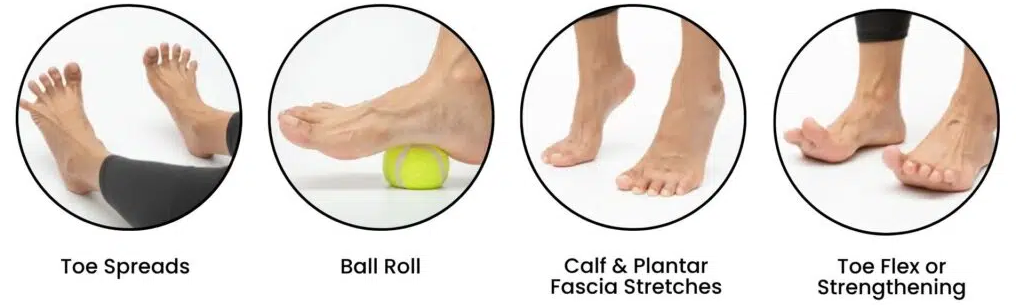
- Ball Rolling Massage
- Place a tennis ball, lacrosse ball, or massage ball on the floor.
- Slowly roll your foot over the ball, focusing on any tender spots.
- Spend at least 2 minutes per foot.
- Toe Joint Release
- Hold each toe between your thumb and index finger.
- Gently pull and rotate each toe to release tension in the joints.
- Repeat for all toes, paying special attention to the area between the third and fourth toes.
When and How Often Should You Massage?
- Best time: After a warm shower when your muscles are relaxed.
- Frequency: Aim for at least 5-7 minutes daily, especially after standing or walking for long periods.
- Listen to your body: If a technique causes sharp pain, adjust your pressure or try a gentler approach.
Many people find combining massage with other techniques, like foot stretching, helps create longer-lasting relief. Feel free to experiment and find the mix that works best for you.
Balance and Weight Distribution Exercises
Poor balance and uneven weight distribution often play a bigger role in Morton’s Neuroma than people realize. If your weight constantly shifts toward the front of your foot, you’re putting extra pressure directly on the irritated nerve.
Balance exercises help retrain your feet to share the load evenly, which reduces pressure on the forefoot and helps relieve pain.
Why Balance Matters for Morton’s Neuroma Relief
- Encourages better posture and alignment from your feet up.
- Strengthens stabilizing muscles in your ankles, feet, and legs.
- Teaches your body to avoid overloading the ball of your foot.
Simple Balance Exercises to Try
You don’t need fancy equipment to work on balance—just your body and a little floor space:
- Single Leg Balance
- Stand on one foot while keeping your other leg lifted slightly off the ground.
- Hold for up to 30 seconds, then switch feet.
- To make it harder, try closing your eyes or standing on a folded towel.
- Heel-to-Toe Walk (Tandem Walk)
- Walk forward in a straight line, placing your heel directly in front of your toes with each step.
- Focus on slow, controlled steps to build awareness of your foot position.
- Wobble Cushion or Balance Board
- Stand on a balance cushion or board, and gently shift your weight from side to side and front to back.
- Start with 30 seconds and gradually increase time.
Tips for Success
- Start barefoot if possible—this helps engage all the tiny muscles in your feet.
- If you feel wobbly, stand near a wall or countertop for support.
- Aim for 5-7 minutes of balance work at least 3-4 days per week.
Many physical therapists recommend balance training as part of a comprehensive foot rehab plan, especially for conditions like Morton’s Neuroma. Over time, you’ll notice your feet becoming more stable and resilient, which can ease everyday discomfort.
Mobility and Joint Loosening Exercises
Stiffness in the foot and ankle can worsen the symptoms of Morton’s Neuroma by limiting natural movement. When your joints are stiff, your body compensates by shifting weight into the ball of your foot, right where the nerve is irritated.
That’s why mobility work—gently restoring smooth, pain-free motion to your joints—is an essential part of long-term relief.
What Exactly is Foot and Ankle Mobility?
Mobility refers to your foot’s ability to move freely and easily through its natural range of motion. For healthy feet, you need:
- Flexible toes that spread, bend, and grip comfortably.
- Mobile ankle joints that allow smooth weight shifting.
- Free-moving metatarsal joints (in the ball of your foot) that absorb shock and adjust to uneven ground.
Best Mobility Exercises for Morton’s Neuroma
- Ankle Circles
- Sit with one leg extended.
- Slowly trace large circles with your ankle in both directions.
- Complete 10 circles each way.
- Toe Spreading and Splaying
- Sit or stand barefoot.
- Try to spread your toes apart as wide as possible.
- Hold for 5 seconds and repeat 10 times.
- Metatarsal Glide
- Sit and place your foot flat on the floor.
- Use your hand to gently wiggle the bones in the ball of your foot side to side.
- This helps loosen stiffness directly at the site of Morton’s Neuroma.
How Often Should You Do Mobility Work?
- Best done daily, especially after long periods of sitting or standing.
- Combine with stretching and strengthening for a complete foot care routine.
Foot mobility often gets overlooked, but it’s one of the most important keys to reducing the mechanical stress that aggravates Morton’s Neuroma. Even a few minutes a day can make walking, standing, and exercising feel easier and more natural.
Footwear, Orthotics, and Supportive Devices
The shoes you wear and the support you provide your feet can either ease or worsen Morton’s Neuroma pain. Many people overlook footwear, yet it’s one of the biggest contributors to nerve compression in your forefoot.
Why Footwear Matters for Morton’s Neuroma Relief
Every time you step down, your shoes impact how your weight is distributed. If your shoes squeeze your toes together or fail to cushion the ball of your foot, the nerve irritation worsens. Choosing the right footwear helps by:
- Reducing direct pressure on the nerve.
- Allowing toes to spread naturally instead of being cramped.
- Absorbing shock to reduce repeated impact on sensitive areas.
Best Shoe Features for Morton’s Neuroma
Look for shoes with:
- Wide toe box to give your toes room to move.
- Cushioned insoles to soften impact.
- Low heel to keep weight evenly distributed across your foot.
- Flexible materials that allow natural foot movement.
The Role of Orthotics
If you need extra support, custom orthotics (or high-quality over-the-counter insoles) can help relieve pressure on the forefoot. Orthotics are especially helpful if you have:
- Flat feet or high arches that change your weight distribution.
- Tight calf muscles, which push more weight forward onto the ball of your foot.
- Standing jobs that demand all-day foot comfort.
Other Supportive Devices to Consider
Depending on your symptoms, you might benefit from:
- Metatarsal pads: Soft cushions that go under the ball of your foot to offload pressure.
- Toe separators: Devices that gently spread your toes apart to prevent nerve compression.
Choosing the right combination of shoes, orthotics, and supports can make a dramatic difference in how your feet feel—especially if you pair them with exercises and lifestyle changes.
Complementary Therapies to Combine with Exercises
While exercises are crucial for Morton’s Neuroma, they work even better when combined with other therapies that reduce inflammation and improve foot health.
Why Combination Therapy Works Best
Morton’s Neuroma is rarely caused by a single factor. It’s usually a mix of poor foot mechanics, nerve irritation, and chronic inflammation. That’s why combining several approaches can give you faster, more lasting relief.
Helpful Therapies to Add to Your Routine
- Physical Therapy
A physical therapist can guide you through a tailored foot strengthening and mobility program, adjusting exercises as you improve. - Ice Therapy
After walking or exercising, applying ice to the ball of your foot can calm nerve inflammation. Use an ice pack wrapped in a cloth for 10-15 minutes. - Stretching Splints
Night splints gently hold your foot in a stretched position, helping reduce morning stiffness in your arch and toes. - Taping Techniques
Some people find relief from special taping methods that offload pressure from the painful area. Your podiatrist or therapist can teach you how. - Topical Anti-Inflammatories
Creams with ingredients like arnica or menthol can offer short-term relief, especially if pain flares up after activity.
Conclusion and Final Tips
Managing Morton’s Neuroma can feel frustrating, especially if you’ve been dealing with persistent foot pain for months or even years. But the good news? You have more control over your foot health than you might think.
Consistency is Your Best Friend
Relief doesn’t happen overnight—but small, daily efforts add up. Even 5-10 minutes a day of targeted exercises can gradually improve flexibility, strength, and nerve comfort.
Combine Exercises with Smart Foot Care
The best results come when you combine exercises with supportive shoes, smart movement choices, and hands-on massage. Think of it as a full-circle care plan for your feet—not just a quick fix.
Listen to Your Body
Every foot is different. If a particular stretch feels amazing, lean into it. If a certain exercise triggers sharp pain, don’t power through. Your body’s signals are valuable clues about what it needs.
Your Next Step
If you’re ready to build a personalized exercise plan or want guidance on your specific symptoms, consider working with a physical therapist or foot specialist. Many people find that with the right support and strategy, they can get back to walking comfortably—and confidently—again.
FAQs
How long until exercises start to relieve pain?
Relief timelines vary, but many people notice milder pain and improved flexibility within 2-4 weeks of consistent exercise. The key is staying gentle yet consistent—overloading your feet too soon can delay healing.
Can exercises completely cure Morton’s Neuroma?
Exercises alone may not fully cure Morton’s Neuroma, especially if you have severe nerve thickening. But when paired with proper footwear, supportive orthotics, and activity modifications, they can significantly reduce pain and prevent future flare-ups.
Are exercises enough, or do I need other treatments?
For mild cases, exercises combined with proper footwear and massage may be enough. In more advanced cases, you might need a multidisciplinary approach, including physical therapy, footwear changes, and possibly medical treatments like corticosteroid injections.
What happens if I stop doing the exercises?
Without regular foot care, symptoms could gradually return. Since Morton’s Neuroma often results from chronic mechanical stress, staying proactive with stretching, strengthening, and mobility work helps maintain relief.
Recent Posts

Best Foot Exercises for Morton’s Neuroma: Pain Relief Tips
Best Foot Exercises for Morton’s Neuroma If you’re struggling with that sharp, burning pain in the ball of your foot—or