
Best Foot Support for Morton's Neuroma: Exercises and Tools
If you’ve ever felt a sharp, burning pain in the ball of your foot—almost like you’re standing on a pebble—you might be dealing with Morton’s Neuroma. It’s a condition that can make every step feel uncomfortable, limiting your daily activities and even your choice of shoes.
In this guide, we’ll walk you through what Morton’s Neuroma is, why foot support matters so much, and how understanding the root causes can help you find lasting relief. Whether you want to stay active, avoid surgery, or simply enjoy a pain-free walk, you’re in the right place.
What is Morton’s Neuroma?
Morton’s Neuroma is a painful foot condition caused by a thickening of the tissue around a nerve leading to your toes—most often between the third and fourth toes. This extra pressure on the nerve triggers sharp pain, burning sensations, or even numbness in the ball of the foot.
What Causes It?
Morton’s Neuroma typically develops due to repetitive stress or pressure on the nerve, often made worse by wearing tight shoes or high heels. Other risk factors include:
- Foot deformities like flat feet or high arches
- Certain sports that put pressure on the forefoot (like running or tennis)
- Long periods of standing, especially on hard surfaces
Common Symptoms
People with Morton’s Neuroma often describe the sensation as:
- Feeling like there’s a pebble stuck under the foot
- Burning pain that spreads to nearby toes
- Tingling or numbness in the toes
- Pain that worsens with activity and improves with rest
Why Foot Support Matters for Morton’s Neuroma
When you have Morton’s Neuroma, every step places pressure on the inflamed nerve. That’s why proper foot support isn’t just a comfort measure—it’s a critical part of healing and pain relief.
How Good Support Helps
- Reduces Direct Pressure: Quality insoles or orthotics help redistribute your weight across the foot, easing pressure on the neuroma.
- Supports Natural Alignment: Proper arch support improves foot mechanics, helping to correct any abnormal pressure points that contribute to the condition.
- Prevents Further Damage: With the right footwear, you can reduce inflammation and protect the nerve from ongoing irritation.
Common Mistakes in Foot Support
Many people unknowingly make their condition worse by:
- Wearing shoes with narrow toe boxes that squeeze the toes together
- Using insoles that lack proper metatarsal support
- Ignoring the importance of cushioning in the ball of the foot
If you’ve struggled to find relief, re-evaluating your foot support might be the missing piece.
Understanding Morton’s Neuroma and Its Impact on Foot Health
How It Develops
Morton’s Neuroma doesn’t happen overnight. It starts with minor irritation to the nerve, often from footwear, overuse, or structural foot issues. Over time, the nerve thickens, and inflammation builds, triggering chronic pain.
How It Affects Your Daily Life
People with Morton’s Neuroma often adjust the way they walk to avoid pain. This unnatural gait can lead to:
- Knee, hip, or lower back pain
- Reduced mobility and avoidance of favorite activities like walking, hiking, or sports
- Difficulty finding comfortable shoes, especially for work or special occasions
The Role of Foot Mechanics
Your foot is designed to distribute weight evenly when you stand or walk. But factors like:
- High arches that concentrate weight on the ball of the foot
- Flat feet that cause excessive pronation (rolling inward)
- Tight calf muscles that limit ankle flexibility
…all contribute to uneven pressure, setting the stage for nerve compression and neuroma formation.
Addressing the Root Cause
That’s why treating Morton’s Neuroma isn’t just about reducing pain temporarily—it’s about correcting foot mechanics and improving foot support long-term. With the right tools and exercises, you can restore natural alignment and help your feet work the way they’re meant to.
Importance of Proper Foot Support in Managing Morton’s Neuroma
If you’ve been struggling with that nagging pain in the ball of your foot, you might be wondering—can the right foot support really make a difference? The short answer is yes. Proper support isn’t just about comfort; it’s about reducing pressure, improving foot alignment, and helping you move without constantly aggravating the nerve.
Why Foot Support Matters More Than You Think
Morton’s Neuroma happens when a nerve in the ball of your foot becomes compressed and irritated. Every step you take, especially if you’re wearing narrow shoes or standing for long hours, adds more stress to the area.
Proper support does a few critical things:
- Reduces direct pressure on the nerve by distributing weight more evenly across your foot.
- Encourages natural foot alignment, so your toes spread properly instead of pinching together.
- Adds cushioning to soften the impact when walking or running.
The Risk of Ignoring Foot Support
Without proper support, the nerve stays irritated, and the pain often worsens. Over time, your body may adjust your walking pattern to avoid the pain, which can lead to:
- Knee and hip pain
- Reduced activity levels (even short walks feel like a chore)
- Difficulty finding shoes that feel comfortable at all
If you’ve already tried switching shoes or adding basic insoles with little success, it might be time to look at more specialized foot support designed specifically for Morton’s Neuroma.
Best Types of Foot Support for Morton’s Neuroma
Finding the right foot support for Morton’s Neuroma can feel overwhelming, especially when there are so many options on the market. Let’s break it down into the most effective types, and how each one helps relieve pain and support healing.
1. Insoles and Orthotics
Custom orthotics or high-quality over-the-counter insoles can make a huge difference. They work by:
- Adding targeted metatarsal support to lift and separate the bones in the forefoot, easing nerve pressure.
- Providing proper arch support, which improves overall foot alignment.
- Offering cushioning to absorb shock with every step.
Pro Tip: Many podiatrists recommend orthotics designed specifically for forefoot issues, so you get the right combination of support and flexibility.
2. Supportive Footwear
Your shoes matter just as much as your insoles. A well-structured shoe for Morton’s Neuroma should:
- Have a wide toe box to prevent toe crowding.
- Offer a low heel or zero drop, so your forefoot isn’t forced into unnatural pressure.
- Provide ample cushioning under the ball of the foot.
Best Types of Shoes:
- Athletic shoes with plenty of room for toe movement.
- Walking shoes with shock-absorbing soles.
- Sandals with built-in arch support (skip flat flip-flops).
3. Toe Spacers and Separators
If your toes tend to squeeze together (especially in dress shoes), a simple toe spacer can work wonders. These soft, flexible devices gently spread your toes apart, reducing direct pressure on the nerve.
Toe spacers are particularly helpful if:
- You have narrow or pointed shoes for work or events.
- You already notice some toe misalignment (like bunions).
- You want extra relief after long days on your feet.
4. Compression Socks and Sleeves
While not a standalone solution, compression socks can reduce swelling and enhance blood flow in the foot. Less swelling means less pressure on the nerve itself.
Look for moderate compression, and make sure the socks fit snugly without cutting off circulation. Many people find them helpful during long periods of standing or travel.
Exercises for Foot Strength and Flexibility (Key for Support)
Even the best insoles and shoes can only do so much if your foot muscles are weak or stiff. Adding simple foot exercises into your daily routine helps you build the strength and flexibility needed for better natural foot support.
1. Stretching Exercises
Tight muscles, especially in your calves and arches, can pull your foot out of alignment and increase forefoot pressure. Regular stretching helps restore proper movement.
Try These:
- Toe Stretch: Gently pull your toes back toward your shin.
- Plantar Fascia Stretch: Roll a frozen water bottle under your arch.
- Calf Stretch: Lean into a wall with one leg back, keeping your heel down.
2. Strengthening Exercises
Strong feet are more resilient. These simple exercises target the small muscles that stabilize your arch and metatarsals.
Try These:
- Towel Scrunches: Use your toes to scrunch up a towel on the floor.
- Arch Lifts: Try to lift just your arch off the ground while keeping toes and heels down.
- Toe Spreading: Practice spreading your toes apart without using your hands.
3. Balance and Mobility Work
Good balance helps train your foot to handle uneven surfaces without overloading the ball of the foot.
Try These:
- Stand on one foot for 30 seconds (gradually increase time).
- Walk heel-to-toe across the room.
- Use a balance board to practice controlled foot movement.
4. Massage and Myofascial Release
Sometimes, pain relief comes from simple self-care. Massage and release work can loosen tight tissues and improve circulation.
Try These:
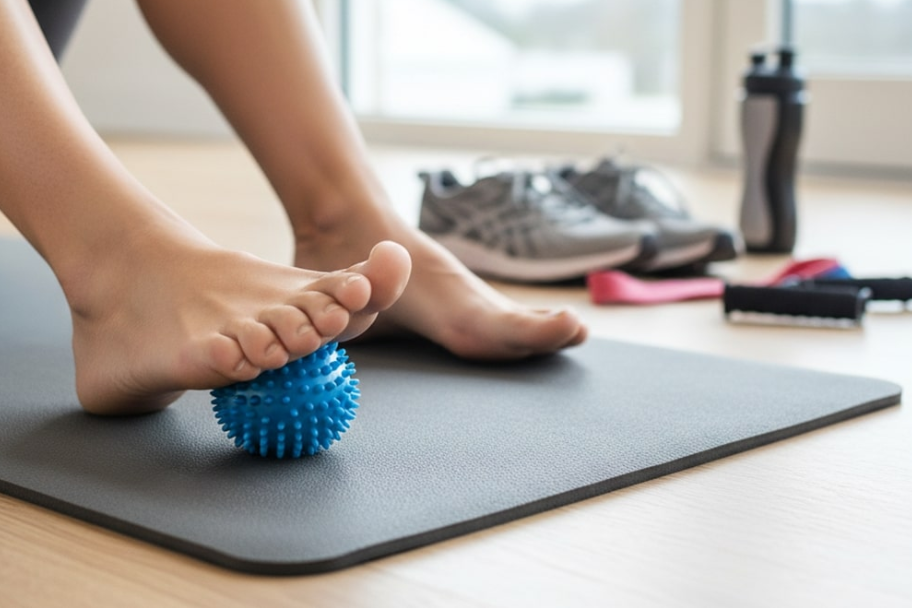
- Roll a small ball (like a lacrosse ball) under your foot.
- Use your fingers to gently massage the ball of your foot.
- Foam roll your calves and arches after long walks.
Combining Exercises and Tools for Optimal Support
Foot support works best when it’s part of a complete care plan. Simply buying an insole won’t fix everything if your foot mechanics are off or your muscles are weak.
Daily Routine for Relief
To get the best results, try combining these steps:
- Start your day with gentle foot stretches.
- Wear shoes with proper arch and metatarsal support.
- Use toe spacers after long hours in shoes.
- End your day with massage or myofascial release.
Progressive Plan for Stronger Feet
As your pain improves, focus on building strength and balance, so your foot can naturally support itself better. Think of your insole as a helpful guide—over time, you want your foot muscles to do more of the work.
Finding What Works for You
Every foot is different. Some people find relief quickly with better shoes and stretches, while others need custom orthotics or physical therapy to fully recover. The key is to stay consistent and listen to your body.
Common Mistakes to Avoid When Choosing Foot Support
When you’re dealing with Morton’s Neuroma, choosing the right foot support can make or break your recovery. But many people unknowingly make avoidable mistakes—and these can keep you stuck in a painful cycle.
Mistake 1: Choosing Narrow or Fashion-First Shoes
Shoes that look great but squeeze your toes can worsen neuroma pain, even if they claim to have cushioning or arch support. If your toes feel cramped, your forefoot is bearing more pressure than it should—and that pressure lands directly on the nerve.
What to do instead: Always prioritize a wide toe box and flexible forefoot, especially if you’ll be wearing the shoes for long periods.
Mistake 2: Ignoring Your Unique Arch Type
Not all feet are the same—and neither is the support they need. If you have flat feet, you’ll need more structured arch support to prevent overpronation. If you have high arches, cushioning becomes even more critical to absorb impact.
What to do instead: Consider getting your foot type assessed by a podiatrist or at a specialty shoe store to find your perfect fit.
Mistake 3: Over-Relying on Generic Insoles
Standard insoles from the drugstore might not target the metatarsal area, which is crucial for Morton’s Neuroma relief. If the insole doesn’t lift and spread the forefoot bones slightly, the nerve can remain compressed.
What to do instead: Look for neuroma-specific insoles or custom orthotics designed to offload pressure from the forefoot.
Mistake 4: Wearing the Same Pair of Shoes Every Day
Even if you’ve found a great pair of supportive shoes, wearing them day after day can compress the cushioning and reduce effectiveness over time.
What to do instead: Rotate between at least two pairs to give the materials time to rebound, and ensure you’re getting optimal support every step.
Mistake 5: Assuming Support Alone Solves Everything
While proper support is critical, it works best when combined with exercises, stretches, and lifestyle changes. Simply adding an insole won’t fully resolve the problem if your foot muscles are weak or your movement patterns are off.
What to do instead: Combine support with daily foot care routines—stretching, strengthening, and smart footwear choices.
‘
‘][|
Lifestyle Modifications for Better Foot Health
Managing Morton’s Neuroma isn’t just about what you put on your feet—it’s also about how you care for your body as a whole. Small changes to your lifestyle can significantly improve your foot health and reduce flare-ups.
Maintain a Healthy Weight
Every extra pound adds pressure to your feet, especially on the forefoot when you walk or run. Studies show that weight management plays a direct role in reducing foot pain conditions like Morton’s Neuroma (Source: American Podiatric Medical Association).
What you can do: Focus on balanced nutrition and regular low-impact exercise, like swimming or cycling, to maintain a healthy weight without overloading your feet.
Monitor and Manage Inflammation
Chronic inflammation can sensitize nerves, making your neuroma pain feel even worse. Diet plays a huge role here—processed foods, excessive sugar, and alcohol can all contribute to inflammation.
What you can do: Add more anti-inflammatory foods to your diet, such as:
- Fatty fish (like salmon)
- Leafy greens
- Turmeric and ginger
- Nuts and seeds
Be Mindful of Activity Levels
Staying active is important, but high-impact workouts—like running on hard surfaces—can irritate the nerve further.
What you can do: Opt for low-impact exercises, such as:
- Swimming
- Cycling
- Yoga or Pilates (with foot-friendly modifications)
If you’re a runner, switch to cushioned running shoes designed for forefoot comfort, and avoid long distances until symptoms improve.
Prioritize Daily Foot Care
Your feet work hard all day—and they deserve attention. Daily foot care habits can prevent stiffness, improve circulation, and ease neuroma pain before it starts.
Simple ways to care for your feet daily:
- Stretch your calves and arches every morning and night.
- Massage the ball of your foot with a tennis or lacrosse ball.
- Soak your feet in warm water after long days on your feet.
When to Seek Professional Help
Sometimes, even with the best foot support and care, your pain might persist—or even worsen. Knowing when to see a professional can save you from months of unnecessary discomfort and potential complications.
Signs It’s Time to See a Podiatrist
If you experience any of the following, don’t wait to seek expert advice:
- Persistent pain despite trying different shoes, insoles, and exercises.
- Numbness or tingling that spreads to adjacent toes.
- Sharp, burning pain even when resting.
- Difficulty walking or balancing because of foot pain.
What a Podiatrist Can Do
A foot specialist can provide a more precise diagnosis, especially if you’ve been self-treating with limited success. They might recommend:
- Advanced imaging (like an MRI) to check the nerve.
- Custom orthotics tailored to your foot shape and movement.
- Steroid injections to calm severe inflammation.
- Physical therapy for guided strengthening and mobility work.
Exploring Advanced Treatments
In rare cases where conservative care doesn’t work, your doctor might suggest options like:
- Alcohol injections to shrink the neuroma.
- Surgical removal of the inflamed nerve (usually a last resort).
While surgery can be effective, it’s not always necessary. Many people find relief through combining proper support, exercises, and professional care—so don’t assume surgery is your only option.
Conclusion
Morton’s Neuroma can feel incredibly frustrating, especially when every step reminds you of the pain. But the good news is—you’re not powerless. With the right foot support, smart footwear choices, targeted exercises, and healthy lifestyle changes, you can take control of your foot health and reduce those daily aches.
Key Takeaways to Remember
- Proper foot support helps offload pressure, realign your foot, and protect the irritated nerve.
- Combine supportive shoes, insoles, and daily exercises for the best results.
- Avoid common mistakes—like wearing narrow shoes or skipping foot strengthening exercises.
- Don’t hesitate to seek professional help if pain persists or worsens.
Most importantly, be patient with your feet. Healing takes time—but every smart choice you make today is a step toward pain-free movement tomorrow.
If you’re ready to find the best support for your feet, start by exploring footwear and insoles designed specifically for Morton’s Neuroma. Your feet deserve the best care—and you deserve to walk without pain.
Recent Posts

Best Foot Support for Morton’s Neuroma: Exercises and Tools
Best Foot Support for Morton’s Neuroma: Exercises and Tools If you’ve ever felt a sharp, burning pain in the ball